Bonneville County Dog Registration Information
Service Dogs and Emotional Support Animals in Bonneville, Idaho
If you’re asking where do I register my dog in Bonneville County, Idaho for my service dog or emotional support dog, the key thing to know is that “registration” can mean different things. In most cases, what residents actually need is a dog license in Bonneville County, Idaho (a local license tied to rabies vaccination and identification). That licensing process is typically handled locally—by the city you live in (like Idaho Falls or Ammon) or by Bonneville County for unincorporated areas.
This page explains the local offices that commonly handle licensing and animal control, how rabies vaccination rules connect to licensing, and how legal service dog status differs from an emotional support animal (ESA). You’ll also learn what an animal control dog license Bonneville County, Idaho process generally looks like, and the practical steps for where to register a dog in Bonneville County, Idaho depending on your address.
Where to Register or License Your Dog in Bonneville County, Idaho
Licensing is often handled at the city level inside Bonneville County (for residents within city limits) and at the county level for residents in unincorporated Bonneville County. Below are example offices and agencies you may need, depending on where you live and who provides animal control or licensing in your area. Information is listed only when it is publicly available from official sources.
Official Offices & Agencies (Examples)
| Office / Agency | Address | Phone | Office Hours | Notes (What they handle) | |
|---|---|---|---|---|---|
Bonneville County Assessor (County Dog Licensing for Unincorporated Areas)Bonneville County
|
357 Constitution Way
Idaho Falls, ID 83402
Mailing: 605 N Capital Ave., Idaho Falls, ID 83402
|
(208) 529-1320 | BCExemptions@BonnevilleCountyIdaho.gov | Weekdays 8:00 AM – 5:00 PM (excluding holidays) | County licensing is required for dogs in unincorporated Bonneville County; this office is identified as a place county residents can license pets (see Sheriff notice). Also referenced in county-level licensing processes. |
Snake River Animal Shelter (County-Referred Licensing & Shelter Services)Snake River Animal Shelter
|
3000 Lindsay Blvd
Idaho Falls, ID 83402
|
(208) 523-4219 | Not publicly listed on the official contact page |
Mon: By appointment (call to schedule)
Tue–Fri: 10:30 AM – 5:30 PM
Sat: 10:30 AM – 5:00 PM
Sun: 12:00 PM – 3:00 PM
|
Per the Bonneville County Sheriff’s notice, county residents may be referred here for services previously handled by the Idaho Falls shelter, and residents can license pets here as well. |
Idaho Falls Animal Services / Idaho Falls Animal ShelterCity of Idaho Falls
|
2450 Hemmert Avenue
Idaho Falls, ID
|
(208) 612-8670 | Not publicly listed on the official page |
Mon–Wed: 10:00 AM – 6:00 PM
Thu: Closed
Fri: 10:00 AM – 6:00 PM
Sat: 10:00 AM – 5:00 PM
Sun: Closed
|
Idaho Falls animal licenses are available at the shelter; rabies vaccination is required to purchase a license. Animal control dispatch is handled through police dispatch. |
City of Ammon (City Hall / City Offices)City of Ammon
|
2135 S Ammon Road
Ammon, ID 83406
|
(208) 612-4000 | clerk@cityofammon.us | Mon–Fri: 9:00 AM – 5:00 PM (closed major federal holidays) | The City of Ammon requires dogs to be licensed annually (city code). City Hall is listed as a place to purchase dog licenses. |
Bonneville County Dispatch (Animal Control Deputy Contact Point)Bonneville County Sheriff / Dispatch
|
Address not listed on the cited official pages | (208) 529-1200 | Not listed on the cited official pages | Hours vary; call dispatch | The Sheriff’s notice instructs residents with questions to contact an Animal Control Deputy through dispatch; Idaho Falls Animal Services also routes animal control contact through dispatch. |
Overview of Dog Licensing in Bonneville County, Idaho
Dog licensing is local (city or county)
In Bonneville County, dog licensing is primarily a local requirement. That means the correct place to register depends on where you live:
- Inside city limits: Many cities run their own licensing rules and processes (for example, Idaho Falls provides licensing through its animal shelter, and Ammon requires annual licensing under city code).
- Unincorporated Bonneville County: The county requires annual licensing for dogs over a certain age and ties licensing to rabies vaccination proof; licensing and tagging are associated with county processes (including the County Assessor as identified in county communications and ordinances).
So when someone searches where to register a dog in Bonneville County, Idaho, the best answer is: start with your city if you’re in city limits, and use the county process if you’re in an unincorporated area.
Rabies vaccination is a core requirement
A current rabies vaccination is a common prerequisite for licensing. For example, Idaho Falls notes that current rabies vaccination is required to purchase a license, and Bonneville County’s ordinance requires dogs over a certain age to be vaccinated for rabies and to present a vaccination certificate with the license application.
A license is not the same as microchipping or “registration papers”
A local license is typically a government-issued record tied to you and your dog (and often a physical tag). Microchipping is a separate identification tool, and breeder registration or “papers” are also different. For public health and rabies enforcement, the license and rabies certificate are usually the key items.
How Dog Licensing Works Locally in Bonneville County, Idaho
Step 1: Identify your jurisdiction (city vs. unincorporated county)
Licensing is not always handled by “the county” even if your mailing address says Idaho Falls. The simplest approach is:
- Confirm whether your home is inside city limits (Idaho Falls, Ammon, Iona, etc.).
- Use the city’s licensing process if you are inside city limits.
- Use the county licensing process if you live in an unincorporated area of Bonneville County.
Step 2: Gather required documentation
Across local agencies, the most consistent documentation requirement is rabies vaccination proof. In practice, you may also be asked for owner identification and basic details that help reunite lost pets with owners (name, address, phone number, and dog description).
Step 3: Apply, pay the fee (if applicable), and receive a tag
County ordinances describe an annual license that is valid for the calendar year and can include identifying information about the dog and owner. The same county ordinance indicates that a numbered tag can be issued after application approval and fee payment, and that proof of rabies vaccination must be presented with the application.
Cities may have their own application methods, renewal schedules, and fee structures. For example, the City of Ammon’s code provides for annual licensing that expires at the end of the year and describes the issuance of a license tag upon payment.
Step 4: Keep the tag current and update changes
Licenses are typically renewed annually. If you move between city limits and unincorporated areas (or between different cities), you may need to change where you license. Keeping contact information current helps animal control and shelters return your pet faster.
Service Dog Laws in Bonneville County, Idaho
Service dogs: trained to perform tasks for a disability
A service dog is generally understood (including in local ordinance language referencing the ADA definition) as a dog that is individually trained to do work or perform tasks for the benefit of an individual with a disability. This is the core legal concept behind service dog status—training and task work, not a registry number.
Do service dogs need a local dog license?
In many jurisdictions, service dogs still must comply with public health requirements like rabies vaccination, and local ordinances may address licensing fees differently. Bonneville County’s ordinance notes that dogs may qualify for an exemption or waiver of the annual individual dog license fee when they qualify as a service animal or service animal in training (as defined under ADA concepts).
Even when a fee is waived, you may still need to complete the local licensing or identification process and maintain current rabies vaccination documentation. If you’re trying to figure out the correct process for a dog license in Bonneville County, Idaho for a service dog, start with the office that licenses in your jurisdiction and ask specifically about service-dog fee waivers and documentation.
What you do not need: online “service dog registration” for legal status
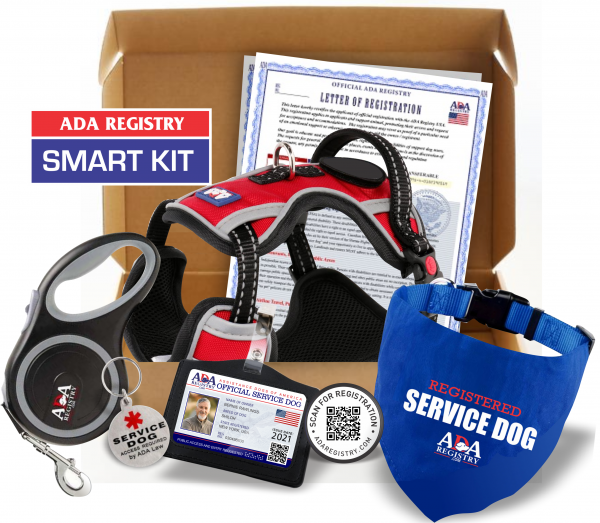
The legal status of a service dog is not created by purchasing an ID card, vest, or listing in a registry. Local licensing (city or county) is about identification and rabies compliance—not granting disability access rights. If someone is selling a “required registration,” that is separate from official local licensing.
Emotional Support Animal Rules in Bonneville County, Idaho
An ESA is not a service dog
An emotional support animal (ESA) provides comfort by its presence, but it is not the same as a trained service dog that performs specific tasks related to a disability. This difference matters because the rules people often associate with service dogs—like broad public access—generally do not automatically apply to ESAs.
Do ESAs need a local license?
Yes—if your city or the county requires licensing for dogs where you live, that requirement applies to ESAs too. An ESA letter is not a substitute for local licensing. If you’re searching where do I register my dog in Bonneville County, Idaho for my service dog or emotional support dog, the ESA portion of the answer is usually straightforward: follow the same local licensing process as any other dog, including rabies vaccination proof, because the license is about animal control and public health compliance.
Housing vs. licensing: keep them separate
ESA documentation is most commonly used in housing contexts (for example, requesting a reasonable accommodation). Licensing is a separate local government requirement. You may need both: local licensing to comply with city/county rules, and ESA documentation if you are requesting a housing accommodation.
Frequently Asked Questions
Disclaimer
Licensing requirements and office locations may change. Residents should verify details with their local animal services office within Bonneville County, Idaho.
Register A Dog In Other Idaho Counties
Select your county below to get started with your dog’s ID card. Requirements and license designs may vary by county, so choose your location to see the correct options and complete your pup’s registration.
- Ada County Dog Registration
- Adams County Dog Registration
- Bannock County Dog Registration
- Bear Lake County Dog Registration
- Benewah County Dog Registration
- Bingham County Dog Registration
- Blaine County Dog Registration
- Bonner County Dog Registration
- Boundary County Dog Registration
- Butte County Dog Registration
- Camas County Dog Registration
- Canyon County Dog Registration
- Caribou County Dog Registration
- Cassia County Dog Registration
- Clark County Dog Registration
- Clearwater County Dog Registration
- Custer County Dog Registration
- Elmore County Dog Registration
- Franklin County Dog Registration
- Fremont County Dog Registration
- Gem County Dog Registration
- Gooding County Dog Registration
- Idaho County Dog Registration
- Jefferson County Dog Registration
- Jerome County Dog Registration
- Kootenai County Dog Registration
- Latah County Dog Registration
- Lemhi County Dog Registration
- Lewis County Dog Registration
- Lincoln County Dog Registration
- Madison County Dog Registration
- Minidoka County Dog Registration
- Nez Perce County Dog Registration
- Oneida County Dog Registration
- Owyhee County Dog Registration
- Payette County Dog Registration
- Power County Dog Registration
- Shoshone County Dog Registration
- Teton County Dog Registration
- Twin Falls County Dog Registration
- Valley County Dog Registration
- Washington County Dog Registration